A distributor does not fail in Southern Europe because the pipe was bad. It fails because the range was wrong — too many diameters nobody asked for, not enough of the six fittings that move every week, and a supplier who could deliver the pipe but not the valves, so half the counter sale walked out to a competitor. The commercial problem in this market is range architecture and paperwork, not raw product quality. This guide covers both: what the range has to contain, what documentation an EU-facing buyer must hold, where landed cost actually leaks, and how to score a manufacturer before you commit stock money to it.
Everything technical below is general industry guidance, not a WARMHAUS-specific specification. Dimensions, pressure classes, packing quantities and regulatory obligations vary by product, by standard edition and by member state implementation — always confirm against the technical datasheet of the pipe and fittings you are actually buying, and against your own customs and compliance advisers, before you place an order. If you are still comparing supplier types rather than ranges, our guide to choosing a plumbing materials supplier covers that earlier decision.
I. What Makes the Southern European Market Different
Three characteristics shape what a distributor should stock. First, PPR is mainstream for hot and cold water in a way it is not everywhere — installers are trained on socket fusion, own the machines, and price their labour around it. Second, radiant floor heating is a normal residential specification, not a luxury item, which puts PEX or PERT coils, manifolds and controls into the same customer’s basket as sanitary pipework. Third, the buyer at the counter is very often a small installation firm buying for one job, not a contractor drawing on a project schedule. That last point is the one that decides your inventory policy.
Single-job buying means breadth beats depth. A firm plumbing a four-storey apartment building needs 20, 25 and 32 mm pipe, elbows, tees, sockets, threaded transitions, valves and a manifold — all on the same day. Hold a magnificent depth of 20 mm elbows and no brass transitions and you have not made the sale. Completeness across the full plumbing product range is a stronger commercial position than volume in any single line.
In a single-job market, the sale is lost by the item you do not have, not won by the item you have plenty of.
The fourth characteristic is regulatory and it is not optional: goods placed on the EU market must carry the right conformity marking and be backed by documentation the distributor is expected to be able to produce. That obligation does not disappear because you bought from an importer rather than a manufacturer. It is worth reading our explainer on what ISO and CE certifications actually mean before you accept a supplier’s paperwork at face value — the two are different categories of document and are routinely confused.
II. Range Planning: What a First-Year Stock List Looks Like
The table below sets out a general framework for a distributor building a plumbing range for this market from a standing start. Priority tiers are commercial judgements about turnover, not technical rankings — a slow-moving item is not a bad item. Diameters and configurations shown are typical of residential and light-commercial work in the region; your own market’s building stock and installer habits should override them.
| Product family | Typical core sizes | Range depth to hold | Stock priority | Buys with |
|---|---|---|---|---|
| PPR pipe — hot and cold (PN20) | 20 · 25 · 32 mm | Full depth; the default sanitary class | Tier 1 — core | Fittings, welding tools |
| PPR pipe — cold only (PN16) | 20 · 25 · 32 mm | Thin; cold distribution lines only | Tier 2 | Cold mains, garden lines |
| PPR pipe (larger bore) | 40 · 50 · 63 mm | One class, on demand | Tier 2 | Risers, plant rooms |
| PPR fittings — plain | 20 · 25 · 32 mm | Elbow, tee, socket, cap, reducer | Tier 1 — core | Pipe, every sale |
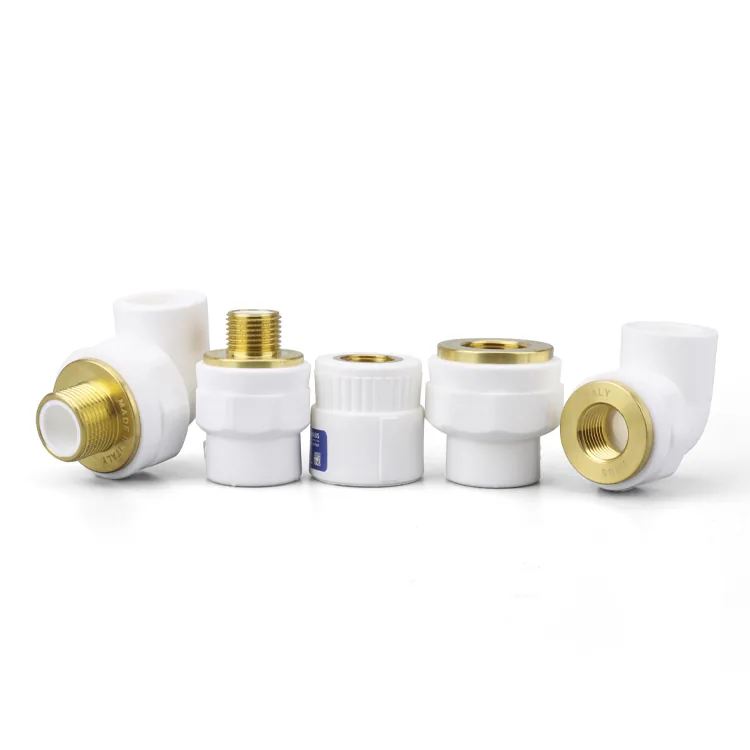
| PPR fittings — brass insert | 20 · 25 mm × ½" · ¾" | Male and female, elbow and straight | Tier 1 — core | Taps, meters, boilers |
| PPR valves | 20 · 25 · 32 mm | Ball valve, plus stop valve variants | Tier 2 | Riser isolation |
| PEX / PERT coil | 16 mm core; 20 mm for long loops | Oxygen-barrier grade; coil length matched to longest planned loop | Tier 1 in heating markets | Manifolds, clips |
| Underfloor manifolds | 2–12 ports (market range) | Mid port counts deep, extremes thin | Tier 2 | PEX, actuators |
| Actuators & thermostats | M30×1.5 or M28×1.5 valve thread | One actuator type per thread family you stock, two thermostat tiers | Tier 2 | Manifolds |
| Brass ball valves | ½" – 1¼" | Full bore, lever handle | Tier 1 — core | Everything |
| Brass compression fittings | 16 · 20 mm × thread | Straight, elbow, tee | Tier 2 | PEX, manifolds |
| Welding machines & dies | 20–63 mm die sets | One machine tier, spare dies deep | Tier 3 — enabler | PPR, sold once |
| Clips, supports, sleeves | Matched to pipe Ø | Core sizes only | Tier 3 — filler | Every pipe sale |
Sizes, classes and depth recommendations are general industry guidance, not a WARMHAUS-specific specification. Pressure classes, coil lengths and thread conventions differ between products and markets. Always confirm against the technical datasheet of the pipe, fittings and valves you are buying, and against the requirements of the market you are selling into.
Four lines in that table deserve a comment, because each is a place where distributors routinely buy the wrong thing.
PN16 and PN20 are not two interchangeable shelf options. A PN number is a nominal rating referenced to water at 20 °C, and polypropylene loses long-term strength as temperature rises — so the pressure a PN16 pipe will actually carry on a 60–70 °C circuit is well below the figure printed on it. In practice PN20 is the general-purpose hot-and-cold sanitary class and PN16 belongs on cold distribution, which is why they are separated by tier above rather than stocked as a matched pair. Stock the classes against the service, not against the price difference. The class-by-class derating logic is set out in our reference on PPR pressure ratings and PN classes.
Actuator threads are the single most-mis-ordered line in a heating range. The industry runs two parallel families — M30×1.5 and M28×1.5 — and a head from one will not seat on a valve insert from the other. There is no universal “standard valve thread”, so a container of actuators bought on price rather than on thread is a container that will not fit the manifolds beside it. Fix the thread family first, then buy the head; the four specifications that must agree are broken down in our guide to underfloor heating manifold actuators. Port counts follow the same discipline — the 2-to-12 span above is what the market commonly catalogues, and the method for turning a floor plan into a port count is set out in the manifold sizing guide.
Coil length is a design variable, not a stock preference. One coil should cover one loop, because a correctly designed floor has no joints inside the screed — so the coil lengths you stock have to be long enough for the longest loop your market’s layouts actually produce. Buy coil length against the loop schedule rather than against a catalogue default. And welding machines are Tier 3 by turnover but Tier 1 by strategic value: an installer who buys their fusion set from you comes back for the pipe that fits it. Finally, brass insert fittings are where PPR ranges usually fail — they are the transition between the plastic system and every threaded appliance in the building, so a gap in that sub-range stalls entire jobs. The detail is covered in our guide to brass insert fittings for PPR systems.
III. The Documentation a Distributor Has to Hold
Selling into the EU makes you an economic operator with obligations of your own. The exact duties differ depending on whether you are legally an importer or a distributor in the supply chain, and that distinction is worth settling with your own compliance adviser rather than assuming. What follows is the practical file every serious buyer keeps, regardless of which label applies.
Conformity documentation for the goods you place on the market
For CE-marked products, the manufacturer draws up an EU declaration of conformity and holds the supporting technical file. You should be able to obtain a copy and identify which products, models and sizes it actually covers. A declaration that names one product family does not cover the rest of the pallet. Check the scope line, not the letterhead.
Management system certificates — and what they do not say
ISO 9001, ISO 14001 and ISO 45001 certify the manufacturer’s quality, environmental and occupational health and safety management systems. They tell you the factory runs controlled processes and keeps records. They are not product approvals and should never be quoted as if a pipe were “ISO 9001 certified”. Hold them because they say something real about the supplier; do not let them substitute for product documentation.
Third-party test reports
Independent testing — for example by SGS — gives you evidence generated outside the factory. Ask which standard the tests were run to, which sample sizes and classes were covered, and how recent the report is. A report on 20 mm PN20 pipe is not evidence about a 63 mm run. Certificate documents: available on request.
Product marking and traceability
Pipe is normally printed along its length with the standard it is made to, the dimension, the pressure class and a production identifier. That printed line is what an inspector, a specifier or an insurer will read first. Confirm at sample stage that the print is legible, durable and says what your commercial documents say — mismatches between marking and paperwork are a slow, expensive problem to unwind.
Standards and dimensional references
Know which standards the products are manufactured to and keep that in the file. PPR dimensional and quality references such as DIN 8077 / DIN 8078 are what a technical customer will ask about. Our reference on PPR pipe specifications sets out the dimension and pressure-class relationships in more detail.
IV. Costing the Range Properly
Distributors lose margin in three predictable places, and none of them appear on a unit price list. The first is freight density. Pipe is bulky and light; brass is dense and heavy. A container of pipe alone runs out of cubic metres long before it runs out of payload, so you ship air. A container of brass alone hits the weight limit with the container half empty, so you ship space you paid for. Mixing families is how you land both efficiently — the arithmetic is worked through in our guide to mixed container sourcing.
The second is supplier count. Every additional manufacturer adds a quality-assurance conversation, a documentation set, a payment relationship, a shipment to track and a claims process to run. Three suppliers for one container is not three times the work; it is three times the work plus the coordination between them — and it introduces the thread-and-dimension mismatches that appear when a PPR fitting from one factory meets a brass valve from another.
The third is minimum order quantity, where range breadth and cash flow collide. A per-SKU minimum forces you either to buy quantities of slow-moving sizes that will sit for two years, or to leave gaps in the range that cost you counter sales. A no-minimum policy lets you buy the long tail one carton at a time and put the cash into the Tier 1 lines that actually turn.
Cost drivers described here are general commercial guidance for planning purposes, not a quotation or a guarantee of outcome. Freight economics, duty treatment and stock-turn assumptions vary by route, product mix and market. Confirm all figures with your own freight forwarder and customs adviser.
V. Scoring a Manufacturer Before You Commit Stock Money
By the time you place a second order you will know whether the supplier was right. The point of a scoring exercise is to know most of it before the first. Work through these six questions with any candidate, and be suspicious of confident answers that arrive without documents attached.
I. Do they manufacture, or do they buy and resell?
A trading company can be a perfectly good partner, but you should know which you are dealing with because it changes everything downstream: who controls the process when quality drifts, who can actually change a specification, and who is on the hook for a claim. Ask which processes are in-house — extrusion, injection moulding, machining — and ask what happens to a batch that fails an internal check. A manufacturer answers that question with a procedure. A reseller answers it with a supplier’s name.
II. Can one supplier cover the families you need?
Map your Tier 1 list against what the candidate actually makes. Plastic pipe and brass components come from entirely different production technologies, so a supplier who covers both is doing two things rather than one — worth verifying rather than assuming. Where one source covers PPR, PEX, brass and controls, you get matched threads and insert dimensions as a by-product, which is a quality benefit as much as a logistics one.
III. What is the real minimum order?
Ask it per SKU, not per order. “No minimum order” that turns out to mean “no minimum on the total value, but 500 pieces per item” is not a no-minimum policy, and the difference decides whether you can carry a complete range in year one.
IV. What is the lead time, and is it a plan or a promise?
A specific number you can build a reorder cycle around beats an optimistic one. A standard lead time of 45 days from confirmed order, planned into production slots, is something you can schedule Tier 1 reorders against. Treat unusually short quoted times with caution — they usually mean stock sitting somewhere, which raises the question of whose stock and how old.
V. Which documents will they send unprompted?
Ask for the management system certificates, the conformity documentation and any third-party test reports in one request, then see what arrives. A supplier who sends scoped, current, legible documents has been asked before by buyers who read them. Our checklist on how to vet a PPR pipe manufacturer goes through the audit questions in full.
VI. Are they set up for the markets you sell into?
Different destinations impose different market-access requirements, and a supplier already shipping into a region has usually solved the documentation problem for it once. Ask which markets they currently supply and what documentation set travels with those shipments — you can see the regions we already ship to on our countries we supply page.
VI. Own-Brand or Distribute Under the Manufacturer’s Name
Sooner or later a distributor building a serious position asks whether to put their own name on the product. Distributing under the manufacturer’s brand is faster to start and needs no packaging investment. Own-brand gives you a range nobody can price-shop line for line against you, and it accrues value to your business rather than the supplier’s — at the cost of artwork, packaging minimums and full responsibility for how the product is presented in your market. The trade-offs are set out in detail in private label versus distribution. It is not a decision that has to be made before the first container, but it is worth making before the third: switching brand identity after the market has learned yours is expensive.
VII. Sourcing the Whole Range From One Manufacturer
WARMHAUS is a manufacturer of PPR, PEX and brass piping systems — not a trading company. The extrusion, injection-moulding and machining lines are our own, which is what makes it possible to supply PPR pipe and fittings, PEX coils, brass fittings and ball valves, underfloor manifolds and controls as one matched range rather than as parts assembled from separate sources. For a distributor, the practical effect is fewer supplier accounts, one documentation set per shipment, and thread and insert dimensions held to a single internal standard across the families that connect to each other.
Manufacturing since 1993 across three plants totalling 100,000 m² of building area, with over 500 staff and 50+ technical and R&D personnel. Total monthly capacity is 2,000 tonnes, of which 600 tonnes is pipe, fittings and brass ball valves. Raw materials come from Hyosung, Borealis and LG. ISO 9001 / ISO 14001 / ISO 45001 certified, EU CE marked and SGS tested. Certificate documents: available on request.
No MOQ — which is the single most useful term for a distributor building range breadth, because the long tail of sizes can be bought a carton at a time instead of a pallet at a time. Standard lead time is 45 days from confirmed order, planned into production slots rather than promised loosely, so Tier 1 reorders can be scheduled against a known cycle. Terms, price structure and the support available to stocking partners are set out on our distributor programme page. Request a range proposal, distributor pricing and the certification file for your market — send us the product families and sizes you sell and we will build the stock list against them.