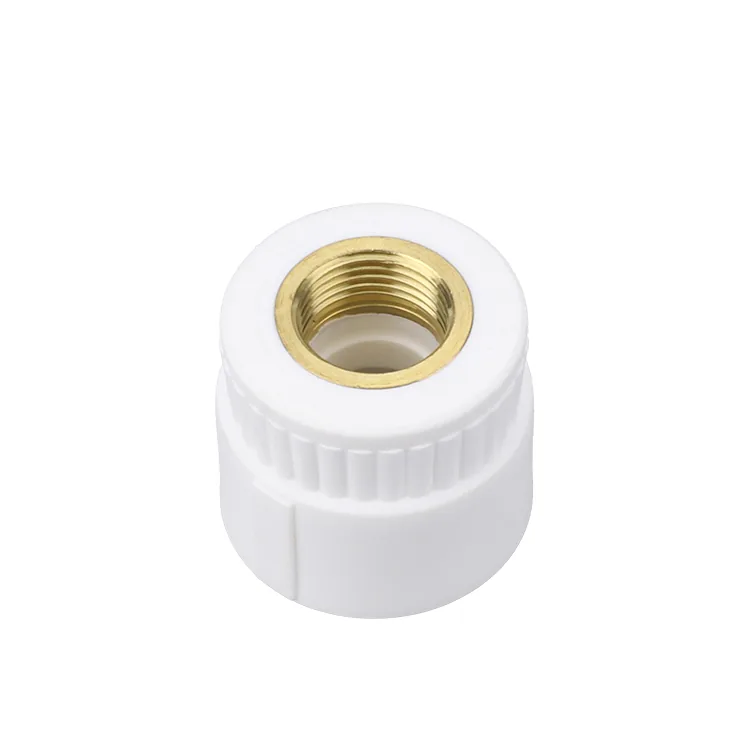
A PPR system is welded everywhere except where it stops being PPR. At the mixer tail, the water meter, the boiler connection and the steel riser, the polypropylene has to hand over to a metal thread — and the part carrying that thread is a brass insert fitting: a machined brass thread locked inside a polypropylene body that welds to the pipe like any other fitting. It is the smallest component in the system and the one most likely to be why a job leaks, because it is the only place where two materials with different expansion behaviour share one seal.
Everything technical below is general industry guidance, not a WARMHAUS-specific specification — insert geometry, retention design and torque limits differ between manufacturers, so always confirm the figures against the datasheet of the fitting, pipe and sealing material you are using.
I. What a Brass Insert Is Doing Mechanically
A thread cut directly into polypropylene will hold — for a while. What it will not do is survive repeated tightening or resist creep when the line runs hot. Polypropylene relaxes under sustained load at temperature, so a joint that was tight on installation day loses preload over months and the seal goes with it. That is the entire reason the brass insert exists.
The insert takes over three jobs the plastic cannot do: it carries the thread form, so a wrench can be used and a metal-to-gasket seal made; it takes the torque, reacted by brass rather than the plastic body; and it holds dimensional stability, so a thread that measured correctly at 20 °C still measures correctly at 70 °C. The body does one job only — it welds to the pipe as a plain socket does, giving the same homogeneous fusion joint described in our PPR hot-melt welding guide.
The plastic side of an insert fitting is welded and effectively permanent. The brass side is the only part of a PPR system a maintenance crew will ever unscrew.
The interface between the two is where that division of labour breaks down. The brass must be held against pull-out and against rotation when the mating thread is tightened — or loosened years later after scale has seized it. Manufacturers solve this with knurling, serrated profiles or circumferential grooves, over which the polypropylene is moulded so it keys into the profile. There is no adhesion between the two materials: retention is entirely geometric, which makes that profile the first thing to look at when evaluating a supplier.
II. The Brass Insert Fitting Range — What Each Variant Is For
Insert fittings are a family, not one part, and a distributor stocking only the male and female sockets will be short on half the calls that come in. The table below sets out the variants most commonly specified, what each connects, and what to check on arrival.
| Variant | What it connects | Typical pairing | Check on arrival |
|---|---|---|---|
| Male threaded socket | PPR pipe to a female metal thread — meters, valves, appliance tails | 20–63 mm to 1/2″–2″ | Thread form and length; insert flush with body face |
| Female threaded socket | PPR pipe to a male metal thread — pumps, boiler tails, gauges | 20–63 mm to 1/2″–2″ | Seat depth; no moulding flash inside the thread |
| Male threaded elbow | Direction change plus transition in one part, at fixtures | 20–32 mm to 1/2″–1″ | Insert seated square to the outlet axis |
| Female threaded elbow | Wall outlet feeding a tap or shower riser | 20–32 mm to 1/2″–1″ | Body wall thickness at the moulded shoulder |
| Male threaded tee | Branch to an appliance from a running main | 20–40 mm to 1/2″–1″ | Branch alignment; insert rotation resistance |
| Female threaded tee | Branch take-off to a metal-threaded valve | 20–40 mm to 1/2″–1″ | Thread concentricity with the branch socket |
| Wall-plate elbow (backplate) | Fixed outlet behind tiling, for taps and showers | 20–25 mm to 1/2″ | Fixing hole spacing to local market convention |
| Union with brass seat | Demountable joint at equipment that will be serviced | 20–63 mm | Seal type; nut turns freely by hand |
| Flange adaptor set | PPR to a flanged pump, tank or large valve | 50 mm and above | Bolt circle and flange standard match the mating part |
Size pairings and variant names are general industry guidance, not a WARMHAUS-specific specification. Available diameters and body designs differ between manufacturers and markets. Always confirm against the dimensional drawing of the fittings you are ordering.
Two deserve a note. The union with a brass seat is forgotten at ordering and then needed urgently: it is the only way to make a joint a service engineer can break and remake without cutting pipe. The wall-plate elbow has market-specific dimensions — fixing centres and depth behind the tile face vary regionally. Both sit in the wider PPR fittings range.

III. Specifying the Brass Side: Thread, Alloy and Finish
The plastic side is specified by pipe outside diameter and PN class, and that part is straightforward. The brass side has three independent variables, and getting any of them wrong produces a shipment that cannot be installed.
I. Thread standard and form
A fitting marked 1/2″ tells you almost nothing on its own. BSP parallel, BSP taper and NPT all exist at that nominal size, they engage with each other by hand, and none of those cross-combinations seals reliably. Parallel threads seal on a washer at a face; taper threads seal on the flanks with a sealant. If you sell into more than one thread convention you carry both — you do not adapt in the field. Our PPR pipe specifications guide and the brass pipe fittings range cover how those designations line up.
II. Alloy and lead content
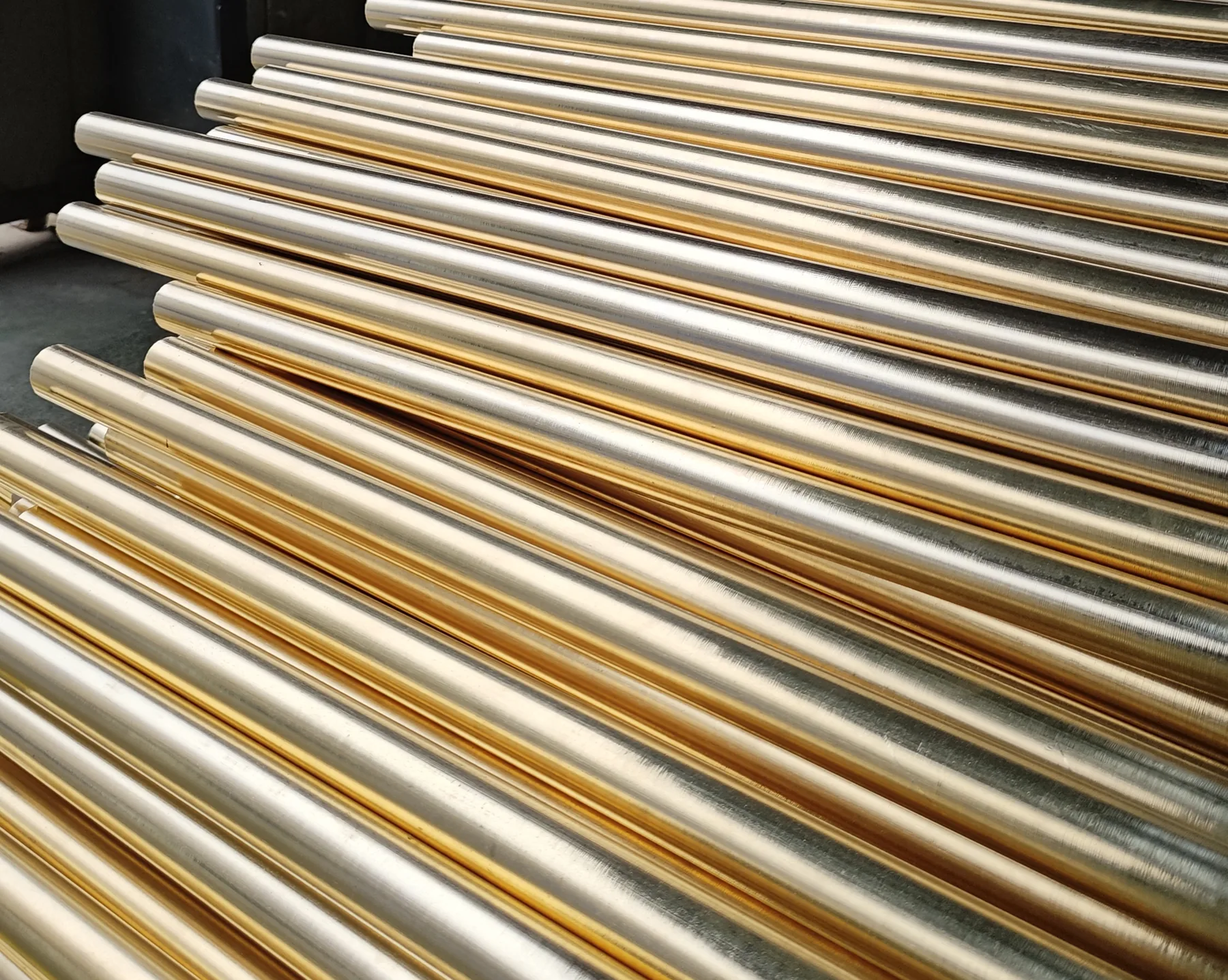
Insert bodies are machined or forged from brass rod, the common working alloys being CW617N and, for machined parts, 57-3-type compositions. Two properties matter more than the grade name. Dezincification resistance: in aggressive or chloride-bearing water, standard alloys lose zinc from the surface inward, leaving a porous pink residue with no strength. And lead content, regulated for potable contact in a growing number of markets. Both are declared on the material certificate for the rod — confirm both in writing before a first order.
III. Surface finish and machining quality
Nickel plating is mostly cosmetic on a part destined for a wall cavity. What matters functionally is the machining: thread flanks free of tearing, no burrs at the entry, no moulding flash in the bore. Flash inside a female thread is the most common reason a fitting will not accept its counterpart on site, and being a trimming control issue it shows up in batches rather than individual parts.
IV. Installing an Insert Fitting Without Damaging It
Insert fittings are installed twice: once welded to the pipe, once screwed to the metal counterpart. The order of those operations decides whether the joint survives.
Weld first, thread second — and never the reverse
Make the fusion joint while the fitting is free, then let it cool fully before applying torque to the brass. Threading first means pushing a softened socket onto a pipe while holding a rigid metal assembly, and the alignment forces go into the plastic-to-brass interface.
Keep the heater die off the brass
The welding die heats to around 260 °C as general industry guidance. Brass conducts heat far better than polypropylene, so a die touching the insert softens the retention profile from the inside out — at the point that has to hold. Heat only the socket depth the fitting is designed for.
Tighten to a torque figure, not to resistance
The failure mode here is not a stripped thread — it is the brass rotating inside the body, or the body splitting at its thinnest section. Both happen well before a wrench runs out of travel. Use the datasheet torque figure where one is given, and hold the fitting body with a second wrench rather than reacting the load through the welded pipe.
Match the sealant to the thread form
PTFE tape and anaerobic sealants are for the flank seal of a taper thread. A parallel thread seals at a face against a washer, and packing it with tape only builds hoop stress in the plastic as the male thread wedges in. Check which form you are holding before reaching for the tape.
One more that is easy to miss: a brass insert is a stiff point in a flexible line, so thermal movement concentrates its load right at the transition. Fix a clip close to the fitting on the plastic side and let the run expand away from it.
Welding temperatures and torque limits are general industry guidance, not WARMHAUS specifications. Always confirm them against the datasheets of the pipe, fitting and welding machine in use.Fitting dimensional drawings and material declarations: available on request.
V. The Four Ways Insert Fittings Fail
Failures here sort into a small number of causes, and knowing which one you have tells you whether the answer is a specification change, a training issue or a supplier conversation.
I. The insert spins inside the body
A wrench is applied, the brass turns, the polypropylene stays still. The retention profile has been over-torqued past its limit or was never adequate for the size. Across a batch rather than at one joint it points to the moulding — insufficient material flow into the knurl. Raise this one with the supplier immediately: it is a process issue and will not improve on its own.
II. The plastic body splits around the insert
A crack running circumferentially or axially around the brass. The usual cause is a male counterpart driven too far into a female insert, putting the surrounding plastic into hoop tension — often made worse by tape packed into a parallel thread. It can also appear months later, when a hot system has relaxed the plastic. Eliminate overtightening first.
III. Dezincification of the brass
A white or greenish deposit outside, a pink porous surface under it, material that crumbles when probed. The alloy has lost its zinc to aggressive water. There is no repair — replace the part and change the specification to a dezincification-resistant alloy. Where several fittings in one building show it, treat it as a water-chemistry finding, not a batch defect.
IV. A weep at the thread that no sealant fixes
Sealant is reapplied, the joint retightened, and it weeps again. Almost always a thread-form mismatch: a taper male in a parallel female or the reverse, which engages happily and never seals. Gauge both parts before assuming the fitting is defective. The other candidate is a damaged sealing face — a scored seat or missing washer weeps however much sealant is added.
VI. Stocking and Sourcing the Transition Line
A plain 25 mm elbow is one line item; a 25 mm male threaded socket is one per thread size it pairs with, per thread standard the market uses. Three rules keep that from sprawling. Depth beats breadth in the small sizes — the 20 mm and 25 mm sockets and elbows in 1/2″ and 3/4″ carry a disproportionate share of movement, because that is where taps, meters and appliances live. Carry the unions even though they turn slowly: they have no substitute, and the call that finds you out of stock is usually a service call with a deadline. And do not mix thread standards in one bin — a BSP and an NPT fitting of the same nominal size look identical on a shelf.
Order these on the same purchase order as the pipe and plain fittings. Transition parts sit at the boundary between your PPR line and your brass line, and when they come from two suppliers the mismatches — thread standard, alloy declaration, insert geometry — appear in your warehouse rather than theirs. The same applies to the isolation valves at those points, specified from the same PPR valve range.
This is also the one component where a supplier’s structure shows. The part needs an injection-moulding line for the body and a brass machining line for the insert, held to one internal standard — because the retention profile and the moulding parameters around it are a single design decision.
VII. One Source for the Plastic Side and the Brass Side
WARMHAUS is a manufacturer of PPR, PEX and brass piping systems — not a trading company. The extrusion, injection-moulding and machining lines are our own, which is why the complete PPR system and the brass valves and fittings range can be specified against each other rather than sourced from separate accounts and hoped to match. Manufacturing since 1993, ISO 9001 / ISO 14001 / ISO 45001 certified, EU CE marked and SGS tested, with raw material from Hyosung, Borealis and LG.
No MOQ — which matters most on exactly this line, where a distributor needs eight thread-and-diameter combinations in small quantities rather than a container of one. Standard lead time is 45 days from confirmed order, planned into production slots. Request the insert fitting dimensional data, thread options and alloy declarations — tell us which thread standard and diameters your market uses and we will send the matching configuration list. Certificate documents and material documentation: available on request.