Comparison Pillar

PPR vs PEX vs Copper vs PVC: Which System Should You Import and Sell?

PPR, PEX, copper and PVC each win in a different job — pick wrong and you tie up a container in stock your market does not buy. This guide compares all four across cost, lifespan, temperature, pressure and installation, then shows when PPR wins, why PEX owns underfloor heating, and how brass ties the whole system together.

i. Manufacturing since 1993 ii. ISO 9001 · 14001 · SGS · CE iii. a complete product range, one source

I. Orientation

If you import, distribute, or install plumbing systems, one decision shapes your whole catalog: which pipe material do you stock? PPR, PEX, copper and PVC each win in a different job — pick wrong and you tie up a container in stock that your market does not buy. This guide compares all four across cost, lifespan, temperature, pressure and installation, then shows exactly when PPR wins, why PEX owns underfloor heating, and how brass fittings tie the system together — so you can choose the right system for the Gulf, North Africa, Southern Europe or Latin America with confidence.

A quick orientation before the table: in the US and Canada, plumbing standardized on PEX and copper decades ago, so PPR is rare there. But across the Middle East, North Africa, Southern Europe and Latin America — WARMHAUS’s core markets — PPR is the mainstream hot-and-cold water system, and PEX is the standard for underfloor heating. What sells in your market is not what sells in Ohio. Read the comparison with your own market in mind.
Go straight to the table

II. The Comparison Table

PPR vs PEX vs Copper vs PVC — Full Comparison

Typical industry values for general orientation — WARMHAUS-specific specs live on each product page and technical datasheet.

Here is the side-by-side that most sourcing decisions come down to. Values are typical industry ranges — always confirm exact PN ratings, temperature classes and certifications against a specific manufacturer’s technical datasheet before you spec a project.

Parameter PPR — Polypropylene Random PEX — Cross-linked Polyethylene Copper PVC / CPVC
Relative material costLow–mediumMediumHighLow
Design lifespan~50 years~40–50 years50+ years~25–40 years
Max continuous tempUp to ~70–95 °C (hot & cold classes)Up to ~95 °C peak; ~60 °C typical circulationVery high — handles heat and firePVC ~60 °C / CPVC ~90 °C
Pressure ratingPN10–PN25 (cold/hot classes)Rated for hot & cold pressure dutyVery highModerate (schedule-dependent)
Joining methodHeat fusion (hot-melt welding) — no glue, no metal jointPush / crimp / expansion fittingsSolder / braze / pressSolvent cement (glue)
Corrosion & scalingImmune (plastic)Immune (plastic)Can corrode / scale over timeImmune (plastic)
FlexibilityRigidHighly flexible — bends around loopsSemi-rigidRigid
Best-fit useHot & cold water supply, risers, mainsUnderfloor heating, radiant, long runsPremium / legacy supply, high-heat linesDrainage, cold water, waste (PVC); hot water (CPVC)
Sold heavily inGulf, North Africa, S. Europe, LATAMRadiant-heating markets worldwideLegacy / premium marketsDrainage everywhere; supply in some regions

III. When PPR Wins

When PPR Wins: Hot & Cold Water Supply

For the water-supply backbone of a building — risers, branch lines, hot and cold mains — PPR is the system to sell across the Gulf, North Africa, Southern Europe and Latin America.

i.

Heat-fused joints, not glue or metal

PPR pipe and fittings are welded into a single continuous piece with a hot-melt machine. There is no adhesive to fail and no threaded metal joint to corrode or leak — the connection is as strong as the pipe itself.

ii.

Immune to corrosion and scaling

Unlike copper, PPR will not corrode, pit, or build up scale that chokes flow over the years. That is a decisive advantage in hard-water and high-mineral regions.

iii.

~50-year design life at a mid-market price

PPR delivers a long service life without copper’s cost — the sweet spot for projects and homeowners who want durability without paying for metal.

A heat-fused joint is not glued or threaded — pipe and fitting are welded into one continuous piece, as strong as the pipe itself.

This is why PPR is the volume seller for distributors in these regions: installers already know hot-melt welding, and buyers pay a premium for a PPR line whose compliance they can verify — CE marking and SGS testing mean the product has been assessed against recognised standards rather than self-declared, and the certificates can be requested and checked. Tenders and project specifications routinely ask for that paperwork; generic imports often cannot produce it.

Explore the WARMHAUS PPR System

IV. PEX & Radiant Floors Underfloor heating

Why PEX Owns Underfloor Heating

When the job is radiant floor heating, the answer changes: PEX — specifically oxygen-barrier PEX-B — is the standard, and one of the highest-value systems you can add to a catalog.

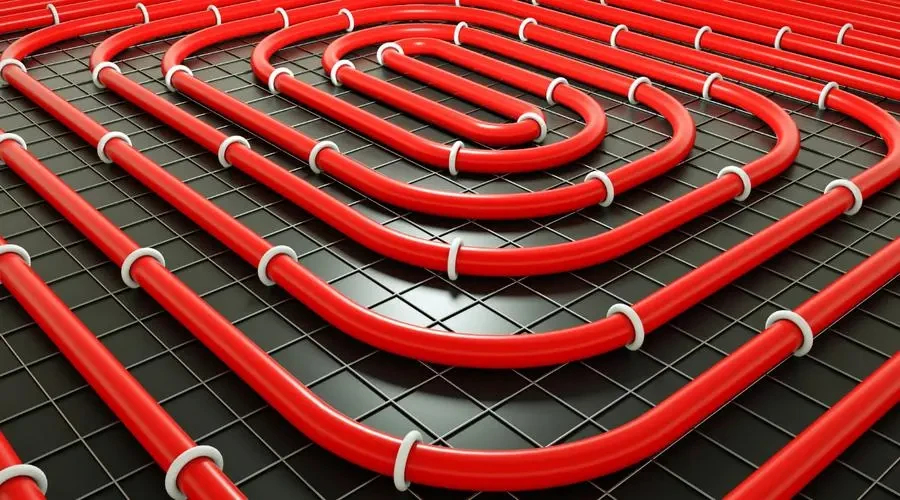
Underfloor heating pipe loops laid before screed — PEX in a heating application

In Situ On site

Three reasons PPR steps aside for PEX here

It bends around loops without fittings. Underfloor heating means long, continuous serpentine runs across a floor slab. PEX pipe is flexible enough to loop back on itself with zero joints in the screed — fewer fittings, faster installation, fewer leak points buried under concrete.

The oxygen barrier protects the whole system. PEX-B for heating carries an EVOH oxygen barrier that stops air diffusing into the water loop, protecting the boiler, pump and metal components from corrosion — critical for a closed circulating system.

It is a complete system, not just a pipe. Real underfloor heating needs the pipe plus a brass manifold to distribute the loops, flow meters to balance them, electrothermal actuators, and a thermostat to control each zone. WARMHAUS builds the whole set.

See the WARMHAUS Underfloor Heating System

For importers and wholesalers, underfloor heating is a premium upsell: higher margin than commodity water pipe, easier to defend on specification when the pipe and components carry third-party certification, and sticky — once an installer standardizes on your manifold and controls, they reorder.

V. The Brass Backbone The brass backbone

Where Brass Fittings Fit In

A plastic piping system does not run on plastic alone. Brass is the metal backbone that connects PPR and PEX to the real world.

Brass connects the plastic line to metal outlets, appliances, fixtures, boilers and manifolds — everywhere a plastic joint cannot go. Quality matters here: low-lead brass grades such as CW617N are chosen for durability, machinability and drinking-water safety.

This is exactly why sourcing pipe and brass from one supplier matters — the valves, inserts and manifolds are made to match the pipe, so nothing is missing and nothing is mismatched when the goods land.

i.Valves that control the line — brass ball valves shut off and regulate flow on both PPR and PEX systems, durable, threadable, rated for pressure and heat that plastic valves are not
ii.Transitions between plastic and metal — brass insert fittings and threaded adapters bridge PPR or PEX to metal pipework, pumps and fixtures, leak-tight and serviceable
iii.The manifold at the heart of underfloor heating — the brass manifold splits one supply into multiple loops and balances flow across the floor

VI. How to Choose The right choice

How to Choose the Right System for Your Market

Cut through the comparison with a simple rule: match the material to the job, not to a single “best” pipe.

If the job is… Choose Why
Hot & cold water supply (risers, mains, branches)PPRHeat-fused, corrosion-free, ~50-year design life at mid-market cost
Underfloor / radiant heatingPEX-B (oxygen-barrier) + brass manifoldFlexible loops, oxygen barrier, complete zoned system
Valves, shut-offs, plastic-to-metal transitionsBrass (grades such as CW617N)Durable metal control points the plastic cannot provide
Drainage, waste, soil, cold-only linesPVC (or CPVC for hot)Cheap, glued, fine where pressure and heat are low

For a distributor building a catalog, the practical answer is usually not one material — it is PPR + PEX + brass together, because a single job site needs all three: PPR for the water supply, PEX and a brass manifold for the heating, and brass valves throughout. The supplier question then becomes: can one manufacturer give me the whole system, matched and certified?

Yes — see all WARMHAUS systems

FAQ Common questions

PPR vs PEX vs Copper vs PVC — Frequently Asked Questions

For the New Importer
Neither wins everywhere — match the material to the job. PPR is the choice for hot and cold water supply (risers, mains) with heat-fused, corrosion-free joints and a ~50-year design life. PEX wins for underfloor heating and long flexible runs. Most markets across the Gulf, North Africa and Latin America sell both, from one catalog.
For the Installer
PEX — specifically oxygen-barrier PEX-B — is the standard for underfloor heating. It bends around serpentine floor loops with no buried joints, and its EVOH oxygen barrier protects the boiler and pump from corrosion in the closed loop. Pair it with a brass manifold, flow meters, actuators and a thermostat for a complete zoned radiant system.
For the New Distributor
The US and Canada standardized on PEX and copper decades ago, so PPR barely exists there. Across the Gulf, North Africa, Southern Europe and Latin America, PPR is the mainstream hot-and-cold water system — installers know hot-melt welding, it resists scaling and corrosion, and a CE- and SGS-certified PPR line commands a premium over generic imports because the test reports and certificates hold up in tenders and at customs.
For the Wholesaler
Brass is the metal backbone of a plastic system. Brass ball valves control the line, brass insert and threaded fittings transition plastic to metal outlets and appliances, and the brass manifold distributes underfloor-heating loops. Low-lead grades such as CW617N give durable, drinking-water-safe connections — which is why matching pipe and brass from one supplier matters.
For the Project Buyer & Importer
Yes. WARMHAUS is a manufacturer, not a trading company — producing PPR water systems, PEX underfloor-heating systems and brass valves and fittings. That is a complete product range from one source, manufacturing since 1993 and certified to ISO 9001 / ISO 14001 / CE / SGS. One certified supplier means matched specs, one warranty, and no missing fittings that cost you a sale.

Start Here Let’s talk

One Certified Manufacturer for PPR, PEX and Brass

Now that you have compared the systems, the sourcing decision is simpler than it looks: WARMHAUS builds all three on its own production lines — manufacturing since 1993, a complete product range, certified to ISO 9001 / ISO 14001 / CE / SGS. Tell us your market and we will send specifications, certificates and distributor terms. MOQ, lead times and pricing: available on request. Response time: within one working day.