Education Guide
Radiant Floor Heating: A Complete Guide to How Underfloor Heating Works
Radiant floor heating turns the entire floor into a gentle, even heat source — no hot radiators, no blown air. Before you specify, distribute or install a system, this guide explains the three things that matter: how radiant heating actually works, what parts make up a complete system, and how to choose between wet and electric.
Radiant floor heating — also called underfloor heating — turns the entire floor into a gentle, even heat source instead of relying on hot radiators or blown air. It has become the standard for comfort in new homes, villas, hotels and projects across the Gulf, the Mediterranean and Europe. But before you specify a system, distribute one, or install one, it helps to understand three things: how radiant heating actually works, what parts make up a complete system, and how to choose between a wet and an electric setup. This guide walks through all three in plain terms.
In this guide:
- How radiant floor heating works
- The components of an underfloor heating system
- Wet vs electric underfloor heating
- How to choose the right system
- Choosing a complete, compatible system
I. How Radiant Floor Heating Works
Radiant floor heating warms a room from the ground up. In a wet (hydronic) system, warm water circulates through loops of pipe laid across the floor. The floor slab absorbs that heat and releases it slowly and evenly across the whole surface, so the entire floor acts as one large, low-temperature radiator. Because heat rises gently from underfoot rather than blasting from one wall, rooms feel comfortable at a lower water temperature than radiators require — which is why radiant systems are valued for even comfort and efficiency.
The physics is simple: heat radiates from a warm surface to cooler objects and people in the room. A traditional radiator heats a small, very hot surface and relies on air currents to move that heat around, leaving cold spots and warm ceilings. A radiant floor heats a huge surface at a low temperature, so warmth is spread evenly at the level where people actually live. This is general industry background; the exact water temperatures and outputs depend on floor build-up, insulation and climate.
A radiator heats a small surface very hot and lets the air do the work; a radiant floor heats the whole surface gently — the warmth lives where the people do.
For a manufactured system built on this principle, see the complete WARMHAUS underfloor heating system.
II. The Components of an Underfloor Heating System
A wet underfloor heating system is not a single product — it is a set of parts that must work together. If any one of them does not match the others, the system leaks, will not balance, or will not control properly. These are the four core components every installer, distributor and project buyer should know:
| Component | What it does |
|---|---|
| PEX pipe | Carries warm water through the floor loops. Flexible, heat- and pressure-resistant, usually with an oxygen barrier; common sizes include 12×16 and 16×22. It bends into tight loops and connects to the manifold. |
| Manifold | The distribution hub. It splits warm supply water into each loop and collects the cooled return water. Each outlet carries a valve and a flow meter so loops can be balanced. Commonly sized from 2 to 8 ports — one port per loop. |
| Electrothermal actuator | A small electric head fitted to each manifold outlet. It opens or closes that loop when the thermostat calls for heat, giving room-by-room and zone control. |
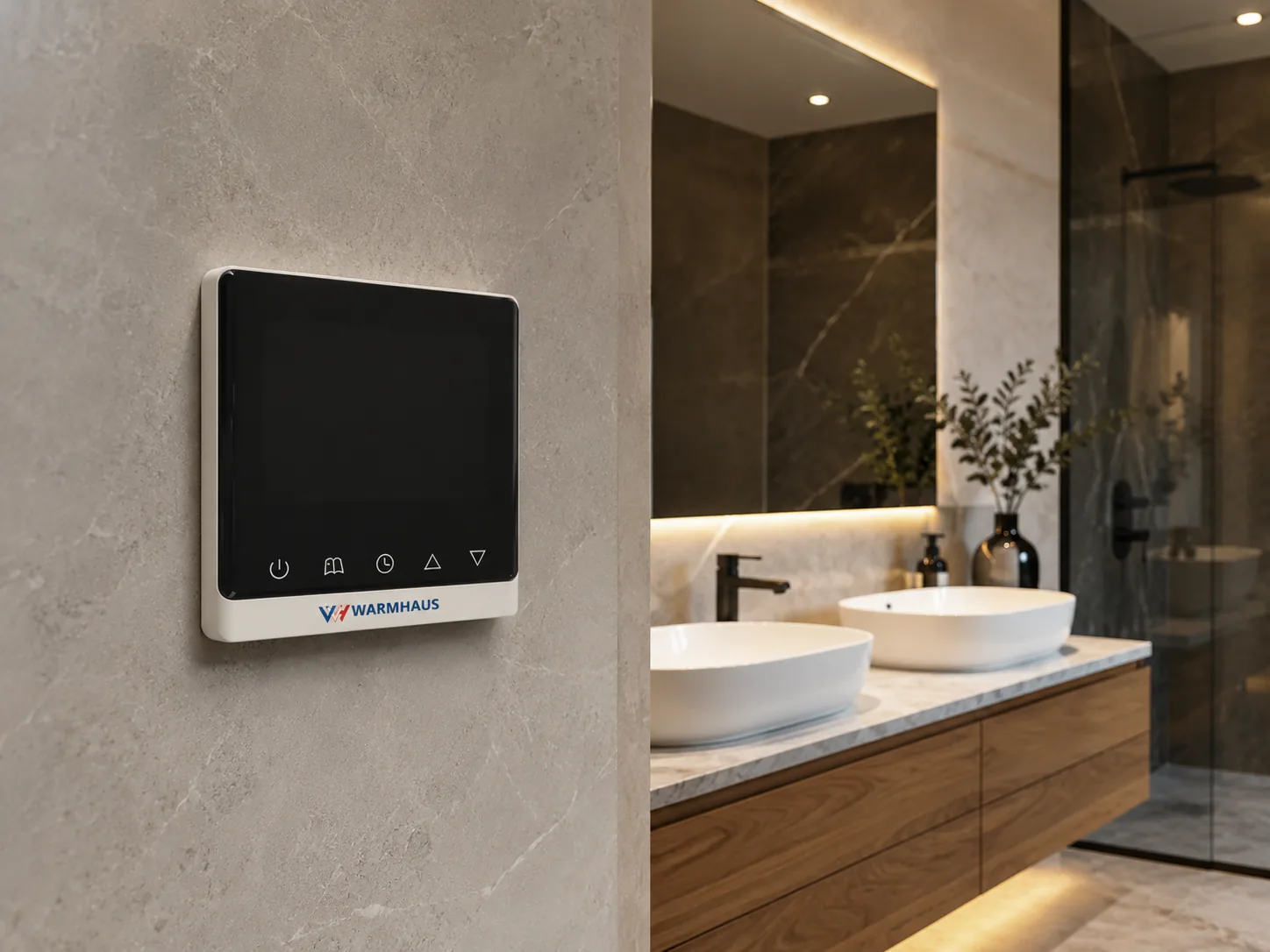
| Thermostat | The controller. It reads room temperature and signals the actuators to open or close loops, holding each room at its target temperature. |

Why Compatibility Matters
Four parts, one system
Because these four parts connect physically and electrically, sizing and threads have to match. When pipe, manifold, actuators and thermostat come from one manufacturer as one system, the parts fit and the installer is not adapting mismatched brands on site. This is exactly why buyers increasingly source the whole system from a single supplier rather than assembling it piece by piece.
Learn more about the distribution hub in the underfloor heating manifold guide, or see the full underfloor heating system.
Request the free Underfloor Heating System Selection Guide (PDF)III. Wet vs Electric Underfloor Heating: What’s the Difference?
There are two main types of underfloor heating, and choosing between them is the first real decision.
Wet (hydronic) underfloor heating circulates warm water through PEX pipe loops connected to a manifold, fed by a boiler, heat pump or other heat source. It costs more to install because it involves pipe, a manifold and a heat source, but it is far cheaper to run across large areas and whole buildings. Wet systems are the standard choice for new builds, villas, hotels and full projects — anywhere the whole floor plan is being heated.
Electric underfloor heating uses heating cables or thin mats laid under the floor finish and controlled by a thermostat. It is cheaper and quicker to install and ideal for small rooms, single-room retrofits and bathrooms, but it costs more to run over large areas, so it is rarely used to heat a whole house.
| Factor | Wet (hydronic) | Electric |
|---|---|---|
| How it heats | Warm water in PEX loops + manifold | Electric cables or mats |
| Install cost | Higher | Lower |
| Running cost (large area) | Lower | Higher |
| Best for | Whole homes, villas, hotels, projects | Small rooms, single-room retrofits |
| Core parts | PEX pipe, manifold, actuators, thermostat | Heating cable/mat, thermostat |
For distributors and projects covering whole buildings, wet systems dominate — which is why the manifold, PEX pipe, actuator and thermostat covered above are the parts that matter most for project-scale radiant heating. This is general industry guidance; the right choice depends on the project size, climate and heat source. See a complete wet radiant floor heating system in the WARMHAUS underfloor heating range.
IV. How to Choose the Right Underfloor Heating System
Once you understand how the system works, choosing one comes down to a short checklist:
Wet or electric?
For a whole home, villa, hotel or project, choose wet (hydronic). For one small room or a retrofit, electric may be enough.
How many loops (and manifold ports)?
Each heating loop connects to one manifold port. Small apartments often need 2–4 ports; villas and project floors need 6–8. Match the manifold port count to your loop layout.
Which pipe size?
Wet systems commonly use PEX-B pipe in sizes such as 12×16 and 16×22, chosen to suit the loop lengths and flow — and, crucially, to fit the manifold outlets.
What control do you need?
Add one electrothermal actuator per loop and a thermostat per zone for room-by-room control.
One system or mixed brands?
Sourcing pipe, manifold, actuators and thermostat as one compatible system from a single manufacturer avoids the sizing and threading mismatches that cause on-site rework.
What Makes It Sell Verifiable certificates
Verifiable certification decides the sale
For importers and distributors, one more factor decides whether the system sells: documented, verifiable certification. Across the Gulf, North Africa, Southern and Eastern Europe, and Latin America, project tenders and customs clearance ask for certificates, not stories. A system carrying EU CE and Swiss SGS approvals, on top of ISO 9001 and ISO 14001 quality and environmental management, can be checked against the issuing bodies' own registers — which is exactly what unbranded imports cannot survive.
Ready to match ports, pipe and controls to a real project? Start with the WARMHAUS underfloor heating system or the brass manifold guide.
Choose your manifold port countV. From Understanding to Specifying: A Complete Certified System
Now that the pieces make sense, the practical takeaway is this: radiant floor heating performs best when the whole system is designed to fit together. Mismatched brands are where leaks, balancing problems and warranty gaps come from. WARMHAUS is a manufacturer, not a trading company — the complete radiant floor heating system comes off our own extrusion, injection-moulding and machining lines: brass manifolds from 2 to 8 ports, PEX-B covered pipe in 12×16 and 16×22, electrothermal actuators, thermostats and valve + flow-meter sets — all engineered as one compatible system, backed by ISO 9001, ISO 14001, ISO 45001 and EU CE certification. For distributors, projects and OEM/private-label partners across the Gulf, North Africa, Southern & Eastern Europe and Latin America, that means one supplier, one system and one warranty, with certificates that clear tenders and customs on their own evidence. On commercial terms we keep it simple: there is no minimum order quantity, so a first trial order can be sized to a single project, and standard lead time is 45 days from order confirmation. Detailed product specifications are confirmed on request via the product pages.
Keep exploring underfloor heating
- Complete Underfloor Heating System — the full certified system: manifold, PEX-B pipe, actuators, thermostats and flow-meter sets from one supplier.
- Brass Underfloor Heating Manifold (2–8 ports) — how the distribution hub works and how to choose port count.
- Hydronic vs Electric Underfloor Heating — which system suits the build, and what each costs to run.
- Underfloor Heating Pipe Spacing — how spacing sets output, and the patterns used in practice.
- PEX Pipe for Underfloor Heating — pipe classes, oxygen barrier and what to specify.
FAQ Common questions
Radiant Floor Heating — Frequently Asked Questions
Radiant floor heating warms a room from the floor up. In a wet system, warm water flows through pipe loops under the floor; the floor absorbs the heat and radiates it evenly into the room. Because the whole floor acts as one large low-temperature radiator, rooms feel warm at a lower water temperature than radiators need.
A wet system has four core parts: PEX pipe carrying warm water through floor loops, a manifold distributing and returning water to each loop, electrothermal actuators opening and closing loops on demand, and a thermostat controlling room temperature. These parts must be sized and threaded to work together as one system.
Wet (hydronic) heating circulates warm water through PEX loops and a manifold, and suits whole-house, villa and project builds. Electric heating uses cables or mats and suits small rooms or single-room retrofits. Wet costs more to install but far less to run over large areas, so most whole-project heating is wet.
The manifold splits warm supply water into each floor loop and collects the return. Each outlet has a valve and flow meter to balance loops for even heat. Manifolds commonly run from 2 to 8 ports — one per loop. Small apartments often need 2–4; villas and project floors need 6–8. Match ports to your loop count.
Wet underfloor heating typically uses PEX pipe (often PEX-B) with an oxygen barrier, because it flexes into tight loops and resists heat and pressure for decades. Common underfloor sizes include 12×16 and 16×22. The pipe must match the manifold outlets so the system fits together as one.
Start Here Let’s talk
From understanding the system to specifying one — fully certified
One manufacturer for the whole radiant floor heating system — manifold, PEX-B pipe, actuators and thermostats, engineered to fit together and covered by EU CE, Swiss SGS and ISO 9001 / 14001 certification. Small trial orders welcome. Response time: within one working day.