Importing a fully certified piping system is one of the smartest moves a distributor can make — a system with third-party certification behind it sells at a premium in markets where tenders and customs both ask for documents. But the first container is where new importers get nervous: which certificates does customs want, how do you load a mixed pallet of pipe and fittings without breakage, and how do you make sure the shipment clears without sitting at the port? This guide walks through what it takes to import certified PPR, PEX and brass piping into the Gulf, North Africa, Southern Europe and Latin America — the documents, the logistics, and how to lock in a supplier who protects your territory instead of selling to the shop next door.
WARMHAUS — PPR, PEX & brass piping · Manufacturing since 1993 · ISO 9001 · ISO 14001 · ISO 45001 · SGS · CE
I. Why Import Certified Piping Instead of the Cheapest Container
Anyone can import a container of anonymous PPR and compete on price until the margin is gone. The distributors who build a real business import a system they can document. A piping range carrying CE marking and SGS certification is backed by documentation against published standards — an EU Declaration of Conformity, ISO management-system certificates and third-party inspection reports — which is exactly what a customs officer, a tender committee or a retail buyer is looking for. In the Gulf, North Africa, Southern Europe and Latin America, buyers are not paying for a story about where a pipe was made; they are paying for evidence that it meets the standard the specification names.
The distributors who build a real business import a system they can document — not the cheapest container on the water.
- A manufacturer, not a trading label — own extrusion, injection-moulding and machining lines, producing since 1993.
- ISO 9001 · ISO 14001 · ISO 45001 · CE · SGS · PT — the certifications that clear customs and open retail and project channels.
- Verifiable compliance — defend margin with documents a buyer can check, not discounts.
- Full system, one supplier — PPR + PEX + brass + underfloor heating, a complete product range in one container.
II. Certificates & Customs Documents You Need — by Region
Every piping import moves on the same core set of documents, plus region-specific certificates. As general guidance, most shipments of PPR, PEX and brass piping need the following — always confirm the current requirements for your destination with your customs broker before you ship:
| Document | What it is | Why customs / buyers want it |
|---|---|---|
| Commercial Invoice | Value, terms and description of the goods | Basis for duty and customs valuation |
| Packing List | SKU, quantity, weight and carton breakdown | Lets customs and your warehouse verify the container |
| Bill of Lading (B/L) | Ocean carrier’s contract and title document | Required to release cargo at the destination port |
| Certificate of Origin (CO) | Declares where the goods were produced | Duty preferences and origin verification at clearance |
| CE Marking / Declaration | Product conformity declaration | Common requirement for building-product compliance |
| Certification copies (ISO / SGS / CE) | Scanned quality and standards certificates | Retail shelf approval, project tenders and customs clearance |
Region-by-region notes — general guidance only
- Gulf / GCC (Saudi Arabia, UAE, Qatar, Oman, Kuwait, Bahrain): many Gulf markets operate conformity or product-registration schemes for building materials, so certificate copies and a Certificate of Origin are typically requested at clearance. Exact scheme requirements per country: confirm with your broker.
- North Africa (Egypt & the Mediterranean): origin documentation and product certifications are commonly required; some markets ask for pre-shipment inspection. Confirm current rules per country.
- Latin America: requirements vary widely by country; a Certificate of Origin plus product-standard documentation is a common baseline. Confirm with your broker.
- Southern & Eastern Europe: as building products moving within or into the EU region, CE conformity documentation is generally central. Confirm current rules.
As the manufacturer, WARMHAUS provides a Certificate of Origin and copies of its ISO 9001:2015, ISO 14001:2015, ISO 45001:2018, SGS, EU CE and Russian PT certificates to authorized partners for customs and tender submissions — see our guide to what ISO 9001 and CE certifications actually mean. Destination-country compliance documents and certificate numbers: provided to authorized partners — details available on request.
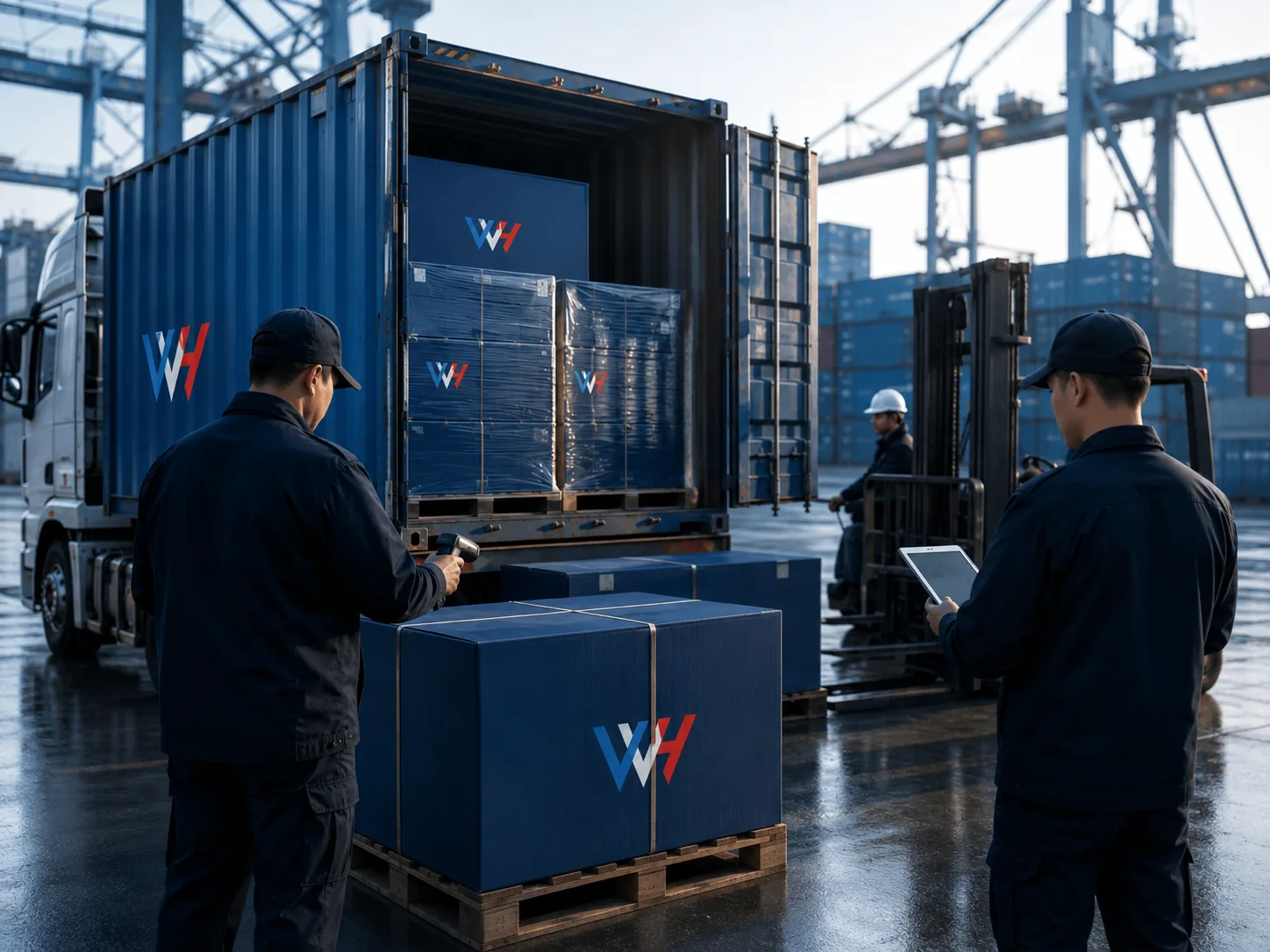
III. Logistics & Container Loading — Getting the Pipe There Intact
Piping is bulky, and how a container is loaded decides both your freight cost per unit and how much arrives undamaged. As general practice, long PPR pipe lengths are bundled and loaded to protect the ends, cartoned fittings are stacked in stable layers, and small heavy items like brass valves and manifolds fill the gaps to maximise container utilisation. The big advantage of sourcing a full system from one supplier is consolidation: instead of chasing pipe from one factory and fittings from another, you build an entire cold- and hot-water and underfloor-heating range into a single mixed container — one shipment, one set of documents, one arrival to clear.
- Mixed container, full system — PPR pipe, PEX, brass valves and manifolds consolidated into one shipment.
- One supplier = one document set — a single invoice, packing list and B/L instead of reconciling several.
- Better utilisation — small heavy items fill voids so you pay to ship product, not air.
- One point of accountability — if anything is queried at the port, there is one supplier to call.
IV. Choosing — or Becoming — the Distributor for Your Market
You can import pipe as a one-off buyer, but the importers who build lasting margin do something smarter: they lock in a distributor agreement that protects their territory. The fastest way to lose money on an imported brand is to grow the market, then watch the factory sell the same containers to the shop next door. WARMHAUS recruits one qualified partner per territory and works toward exclusive regional authorization, so the demand you build — the showrooms, the installer relationships, the brand equity — stays yours. And because there is no minimum order quantity, you can start with a small trial order and test the market before committing to volume — allow 45 days for standard production lead time.
- Exclusive territory — one qualified partner per market, so you are not undercut by a parallel importer.
- No minimum order quantity — start with a small trial order and scale as the market proves out. Standard lead time 45 days.
- Full system to consolidate — a complete product range across four systems in one container.
- Certification & brand support — copies of our ISO 9001:2015, ISO 14001:2015, ISO 45001:2018, SGS, CE and PT certificates, plus brand materials to launch in your market. Certificate numbers available on request.
Weighing an exclusive agreement against a private-label route? Read our comparison of private label vs. distribution.
V. Ready to Import a Certified Piping Brand?
If you are weighing your first container of piping, the two decisions that matter most are the same ones this guide covered: get your import documents in order, and choose a supplier who will protect your territory rather than flood it. WARMHAUS is a CE- and SGS-certified manufacturer of PPR, PEX and brass piping and underfloor-heating systems, producing since 1993 and recruiting one distributor per market across the Gulf, North Africa, Southern Europe and Latin America. See which regions we supply, then apply to become a distributor — and start with a small trial order.
Not sure how to vet the factory itself? Start with our checklist for finding a genuine certified PPR pipe manufacturer.