A PPR Union That Fits but Cannot Be Removed: Check the Service Envelope
A PPR union can fit between two pipe ends yet leave the connected valve impossible to remove. Before ordering, check three spaces separately: room to turn and withdraw the union nut, movement needed to disengage the actual mating faces, and a clear route for the released component to leave the installation. The required dimensions depend on the selected assembly; nominal pipe size alone cannot establish them.
This is a layout and procurement review, not an instruction to open operating pipework. A qualified person must isolate, cool, depressurize and drain the installation as applicable before dismantling. Follow the exact component manufacturer’s instructions and project safety procedure.
Key takeaways
- A demountable joint is useful only when the installed layout allows demounting.
- Nut rotation and component removal are different movements.
- Check the whole assembly, including nearby fixed pipe ends and supports.
- Do not assume that flexible pipe can be bent enough to release the faces.
- Keep service-space approval separate from pressure, temperature and seal suitability.
- Ask for an assembled drawing and removal movement, rather than a universal clearance allowance.
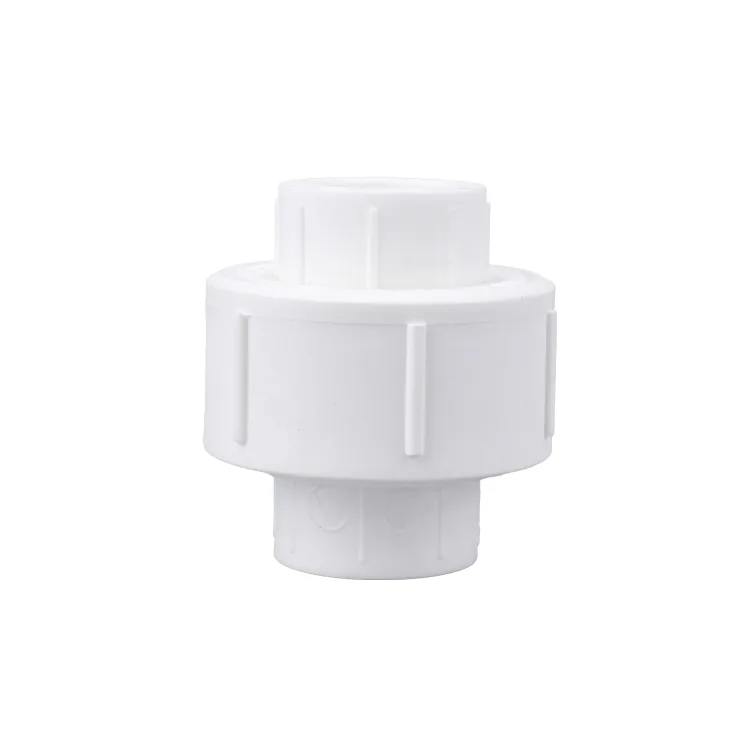
Union component context — Rk Plumbing
This neutral demonstration concerns union fittings. It does not approve the removal path, dimensions or work procedure for a Warmhaus assembly.
Draw the installed outline and the service outline
The installed outline shows where the union, valve and pipe sit during operation. The service outline adds the space occupied while the nut retreats, faces separate and the component is lifted or translated away. A wall, adjacent pipe, cable tray or fixed cover may lie outside the operating outline but inside that service outline.
Mark both outlines on the proposed arrangement. Include insulation or cladding that will actually be present. If a removable panel must come off first, identify it and show its own access. An arrangement that depends on dismantling an unrelated permanent system needs review before it is sold as convenient service access.
Pipetech’s union guidance explicitly calls for room to unscrew the nut and withdraw the connected equipment. Its article concerns PVC unions: the access principle is relevant, while its solvent-cement installation instructions and product-specific details are not PPR fusion instructions.
Check three movements, not one gap
| Movement | Check on the actual drawing | Typical obstruction to identify |
|---|---|---|
| Operate and retreat the nut | Nut outside diameter, wrench access and space behind it | Wall, pipe clip or adjacent branch |
| Disengage the connection | Face geometry and required separating movement | Two fixed pipe ends or an unsupported assumption of pipe flex |
| Remove the equipment | Complete component outline along the proposed exit path | Bracket, adjacent equipment or enclosure opening |
A drawing can pass the first check and fail the third. For example, a nut may rotate freely in front of a wall, but the released valve body may still be wider than the opening through which it is supposed to leave. Moving the union nut does not make the body smaller. Equally, an open removal route does not prove that the faces can first disengage between rigid supports.
No minimum distance is assigned to these movements here. A flat-face design, a recessed seal arrangement and a particular equipment connector can require different motions. Obtain the selected product’s geometry and permitted dismantling method before putting a dimension on the layout.
Review the assembly as a system of fixed and movable parts
Highlight fixed pipe ends, anchors, supports, removable bodies and retained tails in different drawing notes. Then describe which part moves during service and which remains fixed. “Undo both nuts” is incomplete if neither the remaining pipework nor the central body has the movement needed to separate the connection.
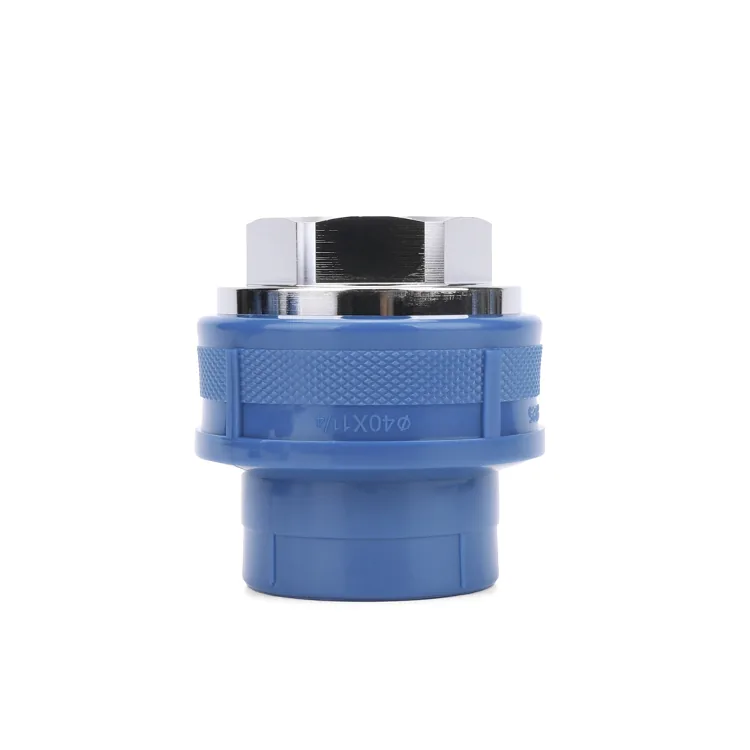
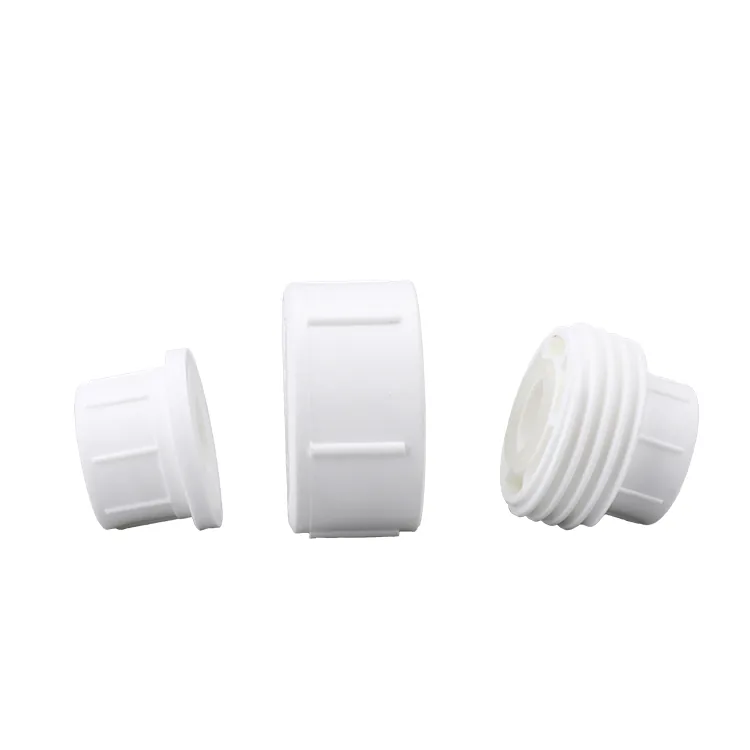
Hansen describes its own Quick Connect Knuckle Union arrangement as allowing pump service by undoing common nuts at the inlet and outlet. That is evidence for the manufacturer’s named design, not proof that any two ordinary PPR unions provide identical movement or flexibility. Do not transfer its angular capability to a Warmhaus fitting.
GF’s Industrial PE handbook warns against using union nuts to pull gaps together or correct misalignment. This supports a separate boundary: do not solve a service-space problem by assuming the nuts can force the system into alignment afterward. GF’s handbook is not a PPR installation approval, and its product-specific dimensions or tightening instructions must not be copied to another assembly.
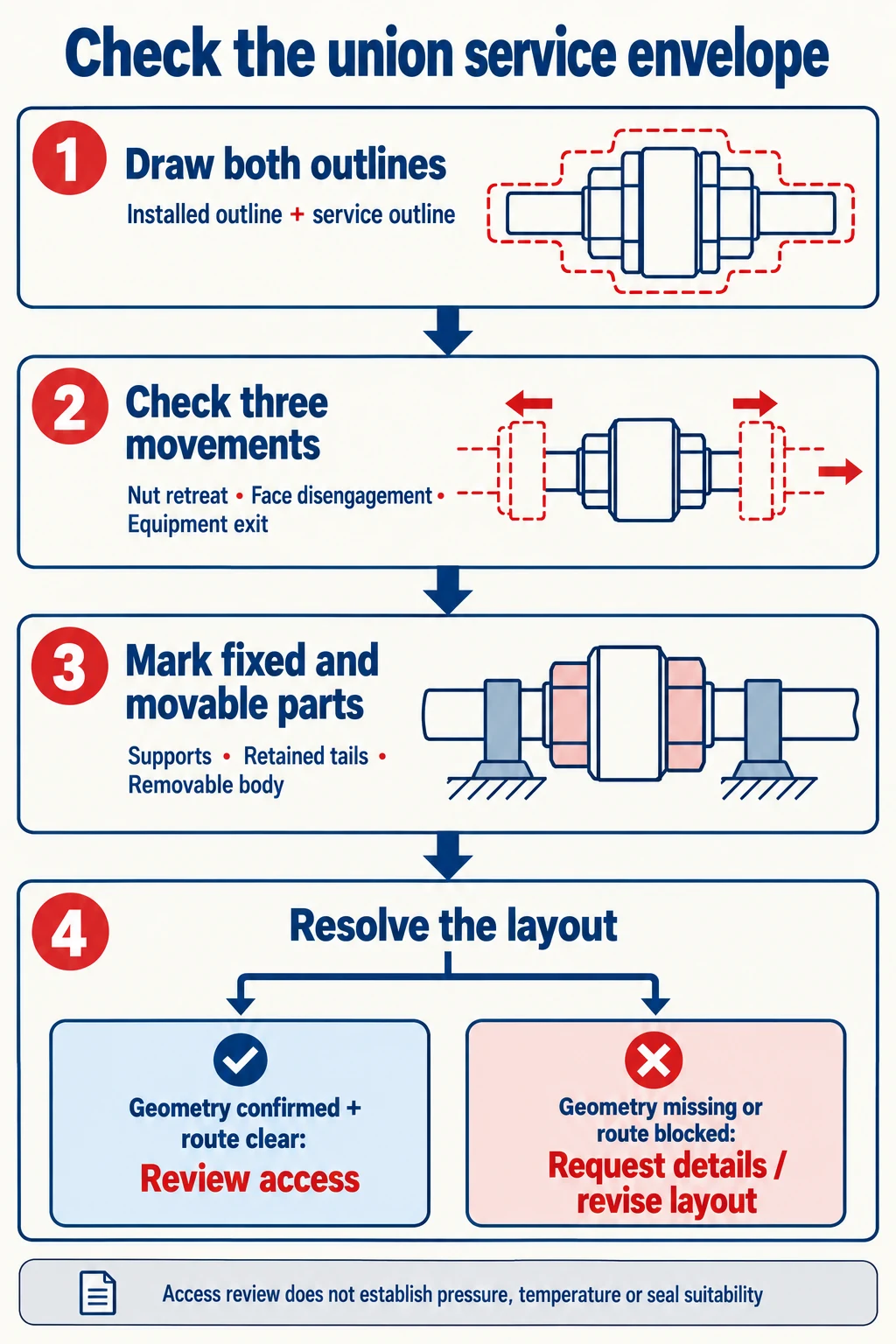
- Draw both installed and service outlines.
- Check nut retreat, face disengagement and equipment exit separately.
- Mark fixed supports, retained tails and the removable body.
- Resolve access against confirmed geometry and a clear route; otherwise request details or revise the layout.
Apply the check to two proposed layouts
Illustrative layout A: an equipment body sits between two fixed pipe runs. Both nuts are reachable, but the drawing shows no separating movement and no manufacturer-confirmed removal path. The result is service access unresolved. Request the mating-face section and permitted movement. Do not approve on the strength of wrench access alone, and do not reject the product as inherently unusable without checking the actual design.
Illustrative layout B: the same body has a manufacturer-confirmed disengagement movement and a clear upward path once the connections are released. The access question can be resolved against those details, provided the final supports, surrounding equipment and insulation leave that space available. Pressure class, seal material, operating temperature and installation approval still require their own checks.
Now add a permanent cable tray across layout B’s upward path. The hydraulic connections have not changed, but the service decision has. The layout needs a verified alternative path or a revised arrangement. That is why a component catalogue image alone cannot demonstrate maintainability in a crowded installation.
Put the unresolved dimensions into the supplier request
| Send with the enquiry | Ask the supplier or designer to identify |
|---|---|
| Exact pipe size, connector type and equipment model | Selected assembly and compatible mating parts |
| Plan and section with fixed ends and surrounding objects | Required nut travel, disengagement movement and exit route |
| Operating duty and required approvals | Application suitability separately from service clearance |
| Proposed retained and removable parts | Manufacturer’s permitted dismantling sequence and replacement seals |
Use the Warmhaus brass-system page for category context. Email the assembly drawing to Email the drawing and ask whether the component scope can be reviewed (sales18-ifan@ifangroup.com), the export contact listed on the Warmhaus contact page, with dimensions, equipment, duty and the proposed removal path. Ask the team to confirm whether it can review the component scope and offer the exact configuration. The exact PPR/brass union configuration, spare parts and application suitability must be confirmed before an order; this article does not verify availability of a particular model.
Conclusion
Approve the service envelope with the assembly, not after the pipework is fixed. A useful review identifies nut access, disengagement movement and the full equipment exit path, then keeps those spaces clear in the final installation. Where the selected geometry is missing, leave the access decision open and request that specific detail.
Frequently asked questions
Does adding a second union guarantee removal?
No. It changes where the connection can open, but the actual face geometry and available removal movement still control the result.
Can the PPR pipe simply be flexed aside?
Do not assume that. Check the selected system’s permitted movement, supports, temperature condition and manufacturer’s instructions rather than using forced movement as the access plan.
Does this determine the required union seal?
No. Seal design and material must match the selected components and duty. A clear removal path cannot establish chemical or temperature suitability.